




The boating industry is entering a period marked by technological change, a sustainability transition, and adaptation to new patterns of vessel use. These trends affect not only boat manufacturers, but also the development of marinas and coastal infrastructure, including Marina Portorož as one of the key nautical hubs in the northern Adriatic.
Industry reviews published by ICOMIA (International Council of Marine Industry Associations) and European Boating Industry (EBI) show that the sector is moving towards sustainable infrastructure, digital management, and flexible models of vessel use.
Below, we present the key boating trends for 2026 that will impact boat owners, marinas, and the wider nautical ecosystem.
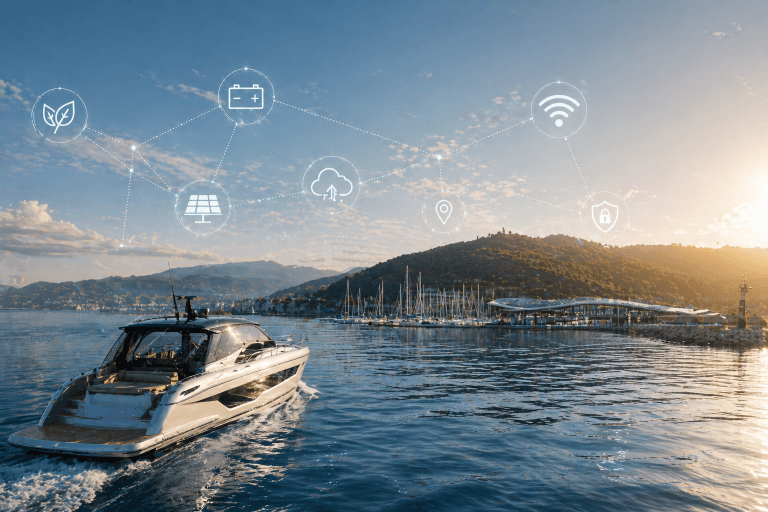
Sustainability as a Strategic Direction of the Boating Industry
Sustainability in boating has evolved from being a supplementary benefit to becoming an integral component of industry strategy. Through its Blue Economy strategy, the European Union promotes the development of maritime activities that reduce environmental impact while maintaining the economic vitality of coastal regions.
In practice, this means:
• improved treatment and management of wastewater,
• the use of environmentally friendly materials,
• optimization of energy consumption in marinas,
• greater transparency of environmental standards.
Marinas are therefore increasingly developing towards energy efficiency and systematic control of their impact on the marine ecosystem. Sustainability is becoming a long-term operational framework, rather than a standalone project.
Electrification of Vessels and Alternative Propulsion
Electrification is one of the most visible technological trends in recent years. At international boat shows, including Boot Düsseldorf, there has been a steady increase in the availability of electric and hybrid vessels and propulsion systems.
Electric propulsion is currently most suitable for:
• smaller vessels,
• tenders,
• short-distance navigation,
• recreational use in sheltered waters.
Hybrid systems represent a transitional solution, combining conventional engines with electric propulsion, increasing energy efficiency and reducing emissions.
In its sustainability initiatives, ICOMIA emphasizes the importance of a gradual transition and the development of infrastructure to support new energy solutions. Electrification is not a one-time change, but a development process that requires coordinated adaptation by manufacturers, boat owners, and marinas.
Digitalization of Boating and Smart Marinas
Digitalization is becoming one of the key drivers of development in boating. Technological solutions enable better vessel management, increased safety, and more efficient marina operations.
The digitalization trend includes:
• remote vessel monitoring systems,
• advanced navigation applications,
• digital platforms for berth management,
• optimization of operational processes in marinas.
European Boating Industry states that digital tools boost transparency, efficiency, and user experience.
For boat owners, this means greater visibility of vessel status and easier planning of activities. For marinas, digitalization enables more efficient infrastructure management and communication with users.
Changes in Boat Owner Behavior
Nautical tourism is evolving. According to European Commission data within Blue Economy reports, the structure of coastal activity usage is adapting to modern lifestyles.
The following patterns can be observed:
• more frequent but shorter trips,
• increased importance of the home marina as a stable base,
• a focus on quality of experience rather than duration,
• greater sensitivity to safety and weather conditions.
This means that choosing the right berth is becoming increasingly important. Stable infrastructure and long-term predictability are the foundation of a successful boating season. In this context, careful selection of a marina and timely securing of a berth play a key role in better planning and reducing operational uncertainty throughout the season.
Infrastructure Development as a Response to Global Trends
Marinas are no longer just mooring points. They are becoming complex systems that combine:
• technical support,
• service capabilities,
• energy infrastructure,
• safety standards,
• digital management.
A comprehensive approach also includes high-quality boat service support, enabling preventive and planned maintenance of vessels. Organizing service outside peak season reduces operational risks and increases reliability.
In the northern Adriatic, marinas are also adapting to these trends. Marina Portorož, as a modern nautical infrastructure, follows the development of service, energy, and digital solutions that support long-term and sustainable vessel use.
Stability, Adaptability and Long-Term Vision
Boating trends in 2026 show that the industry is moving towards sustainability, digitalization, and flexible models of vessel use. Electrification, smart solutions, and changing patterns in nautical tourism are shaping a future that requires thoughtful decision-making from both manufacturers and boat owners.
For marinas, this means developing infrastructure that supports new technologies and ensures a stable environment for long-term vessel use. For boat owners, it means more opportunities, but also greater responsibility in choosing solutions and planning their season.
Boating remains an activity that combines tradition and innovation. The year 2026 does not represent a disruption, but a continuation of an evolution that will shape the coming decades of nautical development.
Within this development framework, marinas such as Marina Portorož play an important role in ensuring a stable and modern environment for the future of boating.


